Surah Al-Fajr — Learn with Audio & Meaning
Listen, repeat, and understand Surah Al-Fajr with word-by-word audio, simple meanings, and a smooth memorization flow designed for clarity.
- Origin: Mecca
- Āyāt: 30
- Theme: Oaths, corrupt nations, human tests, and the tranquil soul
Highlights
- 🔉 Word-by-word audio & pronunciation cues
- 🗒️ Gloss of key words and simple tafsīr notes
- 🧭 Clear verse navigation and progress flow
- 👨👩👧👦 Friendly for beginners, kids, and adults
- 🌙 Gentle repetition for long-term retention
FAQ
❓ Do I need to install an app?
✅ No. Everything runs in your web browser.
❓ Can kids learn with this?
✅ Yes. The interface and audio flow are suitable for children.
❓ Does it include tafsīr?
✅ Yes. Short, easy notes are included for understanding.
~ٱلْفَجْر~
Surah Al-Fajr (The Dawn)
Allah swears by the dawn, the special nights, the even and the odd, and the passing night; then He reminds us of powerful nations that were destroyed, the test of wealth and poverty, and the honour given to the tranquil soul that returns to its Lord.
🔹Reference🔹
Read the original Arabic Tafsīr al-Saʿdi for this surah on KSU
Already familiar with this Surah?
Skip to Quiz
📖 Verse 1
وَالْفَجْرِ
English Tafsir (Al-Saʿdi – concise):
Allah swears by the dawn – the time when the darkness is torn and light appears – as a daily sign of His power, wisdom, and mercy in renewing life and hope.
The start of each day is a reminder that after every darkness, Allah brings light.
📖 Verse 2
وَلَيَالٍعَشْرٍ
English Tafsir (Al-Saʿdi – concise):
Allah swears by the ten nights – nights of special virtue, such as the first ten of Dhul-Hijjah, where acts of worship are greatly rewarded.
Allah chooses particular times so that believers seize seasons of obedience and come closer to Him.
📖 Verse 3
وَالشَّفْعِوَالْوَتْرِ
English Tafsir (Al-Saʿdi – concise):
And by the even and the odd – all pairs and singles in creation, or the even and odd prayers and days – all of which point to Allah’s perfect planning and wisdom.
The balance between even and odd in creation reminds us that everything is under the control of the One Who is unique.
📖 Verse 4
وَاللَّيْلِإِذَايَسْرِ
English Tafsir (Al-Saʿdi – concise):
And by the night as it moves and passes – either when its darkness spreads or when it retreats – another sign of Allah’s control over time and states.
The alternation of night and day trains the heart to remember change, resurrection, and accountability.
📖 Verse 5
هَلْفِيذَٰلِكَقَسَمٌلِذِيحِجْرٍ
English Tafsir (Al-Saʿdi – concise):
Is there not in all of these oaths a strong reminder and proof for anyone who possesses a sound, protected mind that reflects and takes heed?
The intelligent person does not pass by these signs without awakening and reflection.
📖 Verse 6
أَلَمْتَرَكَيْفَفَعَلَرَبُّكَبِعَادٍ
English Tafsir (Al-Saʿdi – concise):
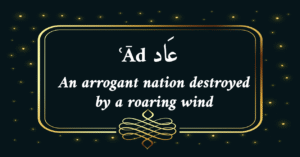
Have you not seen how your Lord dealt with ’Ād – a people of great strength whom Allah destroyed when they rejected the messengers and persisted in arrogance?
Their story is a warning to anyone who feels secure because of material power.
📖 Verse 7
إِرَمَذَاتِالْعِمَادِ
English Tafsir (Al-Saʿdi – concise):
Iram, the city of lofty pillars and strong buildings, whose people were unmatched in power at their time, yet they could not resist Allah’s punishment.
Great structures and impressive cities do not save a nation that turns away from its Lord.
📖 Verse 8
الَّتِيلَمْيُخْلَقْمِثْلُهَافِيالْبِلَادِ
English Tafsir (Al-Saʿdi – concise):
A city like which had never been created in the lands in its strength and structure, yet its people’s arrogance led to complete ruin.
Uniqueness in worldly power is no protection from Allah’s justice when corruption spreads.
📖 Verse 9
وَثَمُودَالَّذِينَجَابُواالصَّخْرَبِالْوَادِ
English Tafsir (Al-Saʿdi – concise):
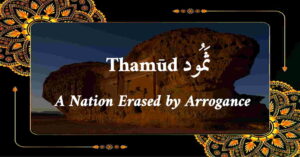
And Thamud, who carved homes and dwellings out of solid rock in the valley, yet still denied the clear signs of their Lord and were destroyed.
Their advanced engineering did not save them when the punishment came.
📖 Verse 10
وَفِرْعَوْنَذِيالْأَوْتَادِ
English Tafsir (Al-Saʿdi – concise):
And Pharaoh, possessor of the stakes – strong armies, buildings, and means by which he fixed and strengthened his kingdom – yet all of it collapsed before Allah’s decree.
A tyrant may think his power is firmly anchored, but it is weak before the Lord of the worlds.
📖 Verse 11
الَّذِينَطَغَوْافِيالْبِلَادِ
English Tafsir (Al-Saʿdi – concise):
Those nations all transgressed in the lands – by disbelief, injustice, and exceeding the limits set by Allah.
When transgression becomes widespread in a society, its destruction comes closer.
📖 Verse 12
فَأَكْثَرُوافِيهَاالْفَسَادَ
English Tafsir (Al-Saʿdi – concise):
They increased corruption in the land – by spreading injustice, oppression, and sin – until it became dominant.
Where corruption is made common and normal, punishment becomes near unless people repent.
📖 Verse 13
فَصَبَّعَلَيْهِمْرَبُّكَسَوْطَعَذَابٍ
English Tafsir (Al-Saʿdi – concise):
So your Lord poured on them a scourge of punishment – continuous, painful, and unavoidable for those who persisted in corruption.
Allah’s punishment is perfectly measured – it reaches the wrongdoers when they insist on their wrongdoing.
📖 Verse 14
إِنَّرَبَّكَلَبِالْمِرْصَادِ
English Tafsir (Al-Saʿdi – concise):
Indeed, your Lord is ever watchful and lying in wait – nothing of people’s deeds escapes Him, and He will call them to account at the right time.
This verse comforts the oppressed and warns the oppressor: no injustice is forgotten with Allah.
📖 Verse 15
فَأَمَّاالْإِنسَانُإِذَامَاابْتَلَاهُرَبُّهُفَأَكْرَمَهُوَنَعَّمَهُفَيَقُولُرَبِّيأَكْرَمَنِ
English Tafsir (Al-Saʿdi – concise):
As for the human being, when his Lord tests him by honouring him and granting him comforts, he says proudly: “My Lord has honoured me,” thinking it is a sign of his status with Allah.
He forgets that wealth and ease are tests, not automatic proof of Allah’s pleasure.
📖 Verse 16
وَأَمَّاإِذَامَاابْتَلَاهُفَقَدَرَعَلَيْهِرِزْقَهُفَيَقُولُرَبِّيأَهَانَنِ
English Tafsir (Al-Saʿdi – concise):
But when He tests him by restricting his provision, he quickly says: “My Lord has humiliated me,” thinking that poverty means he is worthless to Allah.
The surah corrects this: honour and humiliation are based on obedience and sin, not on how much money someone has.
📖 Verse 17
كَلَّابَلْلَّاتُكْرِمُونَالْيَتِيمَ
English Tafsir (Al-Saʿdi – concise):
No! The issue is not honour or disgrace in itself. Rather, you do not honour the orphan – one of the clearest signs of a righteous society.
Neglecting orphans is evidence of hard hearts and misplaced priorities.
📖 Verse 18
وَلَاتَحَاضُّونَعَلَىٰطَعَامِالْمِسْكِينِ
English Tafsir (Al-Saʿdi – concise):
And you do not encourage one another to feed the poor, showing that concern for the needy is absent from your gatherings and hearts.
A believing community urges each other to charity; a corrupt one ignores the hungry.
📖 Verse 19
وَتَأْكُلُونَالتُّرَاثَأَكْلًالَّمًّا
English Tafsir (Al-Saʿdi – concise):
You consume inheritance greedily, taking it all and not giving people their rights, especially the weak and female relatives.
This reveals love of wealth and injustice, even in the most sensitive matters like family inheritance.
📖 Verse 20
وَتُحِبُّونَالْمَالَحُبًّاجَمًّا
English Tafsir (Al-Saʿdi – concise):
And you love wealth with a tremendous love – a love that makes you disobey Allah and neglect rights and obligations.
Love of wealth is not blamed in itself; the blame is when it controls the heart and pushes to injustice.
📖 Verse 21
كَلَّاإِذَادُكَّتِالْأَرْضُدَكًّادَكًّا
English Tafsir (Al-Saʿdi – concise):
No! When the earth is crushed and pounded repeatedly on the Day of Resurrection, and its mountains and structures crumble, then worldly pride will vanish.
The scene of the earth being shattered prepares the listener for the seriousness of the Day of Judgment.
📖 Verse 22
وَجَاءَرَبُّكَوَالْمَلَكُصَفًّاصَفًّا
English Tafsir (Al-Saʿdi – concise, with its proper creed meaning):
And your Lord will come, in a way that befits His Majesty, and the angels will come in rows upon rows – a scene of complete order, awe, and submission on that Day.
This verse describes the greatness of the Day of Judgment and the presence of the Lord’s justice and the angels’ obedience.
📖 Verse 23
وَجِيءَيَوْمَئِذٍبِجَهَنَّمَيَوْمَئِذٍيَتَذَكَّرُالْإِنسَانُوَأَنَّىٰلَهُالذِّكْرَىٰ
English Tafsir (Al-Saʿdi – concise):
Hell will be brought forth on that Day, and the human being will remember his deeds and opportunities – but how will that remembrance benefit him when the time of action has ended?
The verse urges us to remember now, before a day comes when remembrance will not change anything.
📖 Verse 24
يَقُولُيَالَيْتَنِيقَدَّمْتُلِحَيَاتِي
English Tafsir (Al-Saʿdi – concise):
He will say in regret: “Oh, I wish I had sent something forward for my (true) life” – meaning the life of the Hereafter.
The real life is the next one; this worldly life is only the field where we plant for it.
📖 Verse 25
فَيَوْمَئِذٍلَّايُعَذِّبُعَذَابَهُأَحَدٌ
English Tafsir (Al-Saʿdi – concise):
So on that Day, no one will punish like His punishment – severe and perfectly just for those who deserved it.
Allah’s punishment is unique in its justice and power; worldly punishments are nothing in comparison.
📖 Verse 26
وَلَايُوثِقُوَثَاقَهُأَحَدٌ
English Tafsir (Al-Saʿdi – concise):
And none will bind like His binding – meaning the chains, fetters, and restraints of the disbelievers on that Day cannot be compared to anything in this world.
This further shows the seriousness of being from those who are punished in the Hereafter.
📖 Verse 27
يَاأَيَّتُهَاالنَّفْسُالْمُطْمَئِنَّةُ
English Tafsir (Al-Saʿdi – concise):
It will be said: “O tranquil soul” – the soul that is at rest with faith in Allah, trusting His promises and content with His decree.
This is the greatest honour: to be addressed directly by the Lord in kindness and welcome.
📖 Verse 28
ارْجِعِيإِلَىٰرَبِّكِرَاضِيَةًمَرْضِيَّةً
English Tafsir (Al-Saʿdi – concise):
“Return to your Lord, pleased and pleasing” – pleased with Allah and His reward, and pleasing to Him because of her faith and righteous deeds.
This is the end of the path of the believers: mutual pleasure between the servant and the Lord.
📖 Verse 29
فَادْخُلِيفِيعِبَادِي
English Tafsir (Al-Saʿdi – concise):
“So enter among My servants” – join the group of My righteous, honoured servants in the Gardens of bliss.
Being counted among Allah’s servants is itself a title of honour.
📖 Verse 30
وَادْخُلِيجَنَّتِي
English Tafsir (Al-Saʿdi – concise):
“And enter My Paradise” – the final, eternal home that Allah has prepared for His believing servants.
This is the greatest success: to be admitted to Paradise with Allah’s mercy and pleasure.
📚 Recap: Surah Al-Fajr
Summary of the Meanings (based on Tafsir Al-Saʿdi):
Allah swears by the dawn, the blessed ten nights, the even and the odd, and the night as it passes, then reminds of ’Ād, Thamud, and Pharaoh. They had great power and buildings but were destroyed because they transgressed and filled the land with corruption.
Then the surah exposes how many people misread Allah’s tests: when honoured with wealth, they think it means Allah is pleased with them; when restricted, they think it means humiliation. The real blame is that they neglect the orphan, the poor, inheritance rights, and love wealth excessively.
Finally, the surah moves to the Day of Judgment: the earth is crushed, the Lord and the angels come in rows, Hell is brought, and the human being regrets wasted opportunities. Then comes the gentle call to the tranquil soul: return to your Lord, pleased and pleasing, enter among My servants and enter My Paradise.
📝 Al-Fajr Quiz – Based on Tafsir Al-Saʿdi