
Surah Al-Qiyaama — Learn with Audio & Meaning
Listen, repeat, and understand Surah Al-Qiyaama with word-by-word audio, simple meanings, and a smooth memorization flow designed for clarity.
- Origin: Mecca
- Āyāt: 40
- Theme: Resurrection, accountability & the Hereafter
Highlights
- 🔉 Word-by-word audio & pronunciation cues
- 🗒️ Gloss of key words and simple tafsīr notes
- 🧭 Clear verse navigation and progress flow
- 👨👩👧👦 Friendly for beginners, kids, and adults
- 🌙 Gentle repetition for long-term retention
FAQ
❓ Do I need to install an app?
✅ No. Everything runs in your web browser.
❓ Can kids learn with this?
✅ Yes. The interface and audio flow are suitable for children.
❓ Does it include tafsīr?
✅ Yes. Short, easy notes are included for understanding.
~ٱلْقِيَامَة~
Surah Al-Qiyaama (The Resurrection)
Start learning and memorizing a surah that affirms resurrection and accountability, depicts death and the Last Day, and proves Allah’s power to bring the dead back to life.
🔹Reference🔹
Read the original Arabic Tafsīr al-Saʿdī for this surah
Already familiar with this Surah?
Skip to Quiz
📖 Verse 1
لَا أُقْسِمُ بِيَوْمِ الْقِيَامَةِ
English Tafsir (Al-Sa‘di):
Allah swears by the Day of Resurrection, affirming that people will be raised from their graves and stand before their Lord for judgment.
The oath affirms resurrection, rising from the graves, and standing for judgment.
📖 Verse 2
وَلَا أُقْسِمُ بِالنَّفْسِ اللَّوَّامَةِ
English Tafsir (Al-Sa‘di):
Allah also swears by every self-reproaching soul. The believer reproaches himself for shortcomings in this world, and every soul will reproach itself on the Day of Resurrection.
It is the soul that repeatedly reproaches itself for its deeds and shortcomings.
📖 Verse 3
أَيَحْسَبُ الْإِنسَانُ أَلَّن نَّجْمَعَ عِظَامَهُ
English Tafsir (Al-Sa‘di):
The stubborn denier imagines that Allah will not gather his bones after death, out of ignorance and aggression.
He denies that his scattered bones will be gathered after death.
📖 Verse 4
بَلَىٰ قَادِرِينَ عَلَىٰ أَن نُّسَوِّيَ بَنَانَهُ
English Tafsir (Al-Sa‘di):
Yes indeed. Allah is fully able to restore even his fingertips; by restoring them, the whole body is restored perfectly.
Allah is able to restore even the smallest and finest parts of the body.
📖 Verse 5
بَلْ يُرِيدُ الْإِنسَانُ لِيَفْجُرَ أَمَامَهُ
English Tafsir (Al-Sa‘di):
His denial does not arise from a lack of evidence. Rather, the human being wants to continue in deliberate sin and denial throughout the life ahead of him.
He wants to persist in wrongdoing during the time that remains before him.
📖 Verse 6
يَسْأَلُ أَيَّانَ يَوْمُ الْقِيَامَةِ
English Tafsir (Al-Sa‘di):
He asks about the Day of Resurrection as one who deems it far-fetched and denies it: When will it be?
The question is asked in denial and as though the Resurrection were far-fetched.
📖 Verse 7
فَإِذَا بَرِقَ الْبَصَرُ
English Tafsir (Al-Sa‘di):
When the Resurrection comes, the sight will be dazzled and fixed because of the immense terror it sees.
The eyes stare in bewilderment at the horrors of that Day.
📖 Verse 8
وَخَسَفَ الْقَمَرُ
English Tafsir (Al-Sa‘di):
The moon will lose its light and become dark.
The moon’s light will disappear.
📖 Verse 9
وَجُمِعَ الشَّمْسُ وَالْقَمَرُ
English Tafsir (Al-Sa‘di):
The sun and moon will be joined: the moon will be darkened and the sun will be folded up. Their condition will show that they are subjected servants of Allah.
The sun and moon will be brought together after their light is taken away.
📖 Verse 10
يَقُولُ الْإِنسَانُ يَوْمَئِذٍ أَيْنَ الْمَفَرُّ
English Tafsir (Al-Sa‘di):
On seeing those terrors, the human being will ask in alarm where he can flee and find rescue.
He looks for an escape from the terrors before him.
📖 Verse 11
كَلَّا لَا وَزَرَ
English Tafsir (Al-Sa‘di):
There will be no refuge and no place in which anyone can take shelter apart from Allah.
No mountain, fortress, or other refuge will provide safety.
📖 Verse 12
إِلَىٰ رَبِّكَ يَوْمَئِذٍ الْمُسْتَقَرُّ
English Tafsir (Al-Sa‘di):
The final destination that Day will be to your Lord. No one can hide or flee; all will be stopped before Him and recompensed.
All creation will finally stand before Allah for recompense.
📖 Verse 13
يُنَبَّأُ الْإِنسَانُ يَوْمَئِذٍ بِمَا قَدَّمَ وَأَخَّرَ
English Tafsir (Al-Sa‘di):
The human being will be informed of all his deeds, good and evil, what he did earlier and later; he will receive a report that he cannot deny.
Every deed sent ahead or left behind will be disclosed.
📖 Verse 14
بَلِ الْإِنسَانُ عَلَىٰ نَفْسِهِ بَصِيرَةٌ
English Tafsir (Al-Sa‘di):
The human being will be a clear witness against himself and will know his own condition and deeds.
A person knows his own deeds and is a witness against himself.
📖 Verse 15
وَلَوْ أَلْقَىٰ مَعَاذِيرَهُ
English Tafsir (Al-Sa‘di):
Even if he offers every excuse, it will not be accepted. His hearing, sight, and limbs will testify against what he did.
Excuses will not remove the testimony established against him.
📖 Verse 16
لَا تُحَرِّكْ بِهِ لِسَانَكَ لِتَعْجَلَ بِهِ
English Tafsir (Al-Sa‘di):
Because the Prophet was eager to retain the revelation, he would hasten with the recitation while Jibril was reciting. Allah instructed him not to move his tongue in haste.
He was instructed to listen and not hasten while the revelation was being recited.
📖 Verse 17
إِنَّ عَلَيْنَا جَمْعَهُ وَقُرْآنَهُ
English Tafsir (Al-Sa‘di):
Allah guaranteed that the Qur’an would be gathered in the Prophet’s heart and that he would be able to recite it.
Allah guaranteed its preservation in his heart and its recitation by his tongue.
📖 Verse 18
فَإِذَا قَرَأْنَاهُ فَاتَّبِعْ قُرْآنَهُ
English Tafsir (Al-Sa‘di):
When Jibril completed its recitation, the Prophet was to follow and listen to that recitation.
After the recitation was completed, he was to follow it attentively.
📖 Verse 19
ثُمَّ إِنَّ عَلَيْنَا بَيَانَهُ
English Tafsir (Al-Sa‘di):
Allah also guaranteed the explanation of the Qur’an’s meanings.
Its meanings and explanation are guaranteed by Allah.
📖 Verse 20
كَلَّا بَلْ تُحِبُّونَ الْعَاجِلَةَ
English Tafsir (Al-Sa‘di):
The cause of this heedlessness is that people love the immediate world, its pleasures, and its desires.
They prefer the present world because its enjoyment is immediate.
📖 Verse 21
وَتَذَرُونَ الْآخِرَةَ
English Tafsir (Al-Sa‘di):
They leave the Hereafter and neglect working for it, although it is everlasting and deserves to be preferred.
They abandon concern and preparation for the lasting Hereafter.
📖 Verse 22
وُجُوهٌ يَوْمَئِذٍ نَّاضِرَةٌ
English Tafsir (Al-Sa‘di):
The faces of those who preferred the Hereafter will be radiant, beautiful, and illuminated because of the joy within their hearts.
Their outward radiance reflects the bliss and joy within them.
📖 Verse 23
إِلَىٰ رَبِّهَا نَاظِرَةٌ
English Tafsir (Al-Sa‘di):
They will look at their Lord according to their ranks, delighting in the sight of His noble Face; this will increase their radiance.
They will look at their Lord and delight in seeing His noble Face.
📖 Verse 24
وَوُجُوهٌ يَوْمَئِذٍ بَاسِرَةٌ
English Tafsir (Al-Sa‘di):
The faces of those who preferred the immediate world will be gloomy, frowning, humiliated, and darkened.
Their faces will show gloom, humiliation, and distress.
📖 Verse 25
تَظُنُّ أَن يُفْعَلَ بِهَا فَاقِرَةٌ
English Tafsir (Al-Sa‘di):
They will expect a severe, backbreaking punishment and painful torment to be inflicted upon them.
They expect a calamity so severe that it breaks the back.
📖 Verse 26
كَلَّا إِذَا بَلَغَتِ التَّرَاقِيَ
English Tafsir (Al-Sa‘di):
When the soul reaches the collarbones, distress becomes intense and the dying person seeks every possible means of relief.
The soul has risen to the collarbones as death draws near.
📖 Verse 27
وَقِيلَ مَنْ رَاقٍ
English Tafsir (Al-Sa‘di):
It will be asked who can perform a healing recitation and cure him. Ordinary means have been exhausted, but Allah’s decree cannot be repelled.
They seek someone who might treat him by recitation or another remedy.
📖 Verse 28
وَظَنَّ أَنَّهُ الْفِرَاقُ
English Tafsir (Al-Sa‘di):
The dying person becomes certain that this is the separation from the world.
He realizes that death is the final parting from worldly life.
📖 Verse 29
وَالْتَفَّتِ السَّاقُ بِالسَّاقِ
English Tafsir (Al-Sa‘di):
One hardship is joined to another, the matter becomes grave, and the soul is forced to leave the body to which it was accustomed.
The hardships of death are joined together and become severe.
📖 Verse 30
إِلَىٰ رَبِّكَ يَوْمَئِذٍ الْمَسَاقُ
English Tafsir (Al-Sa‘di):
The soul will be driven to Allah for recompense, and the servant will be made to acknowledge his deeds.
The final driving is to Allah, where every person is recompensed.
📖 Verse 31
فَلَا صَدَّقَ وَلَا صَلَّىٰ
English Tafsir (Al-Sa‘di):
The denier neither believed in Allah and what must be believed, nor prayed.
He neither affirmed the truth nor established prayer.
📖 Verse 32
وَلَٰكِن كَذَّبَ وَتَوَلَّىٰ
English Tafsir (Al-Sa‘di):
Rather, he denied the truth and turned away from it.
He met the truth with denial and withdrawal.
📖 Verse 33
ثُمَّ ذَهَبَ إِلَىٰ أَهْلِهِ يَتَمَطَّىٰ
English Tafsir (Al-Sa‘di):
Then he went to his family swaggering, carefree, and unconcerned.
He returned proudly and carelessly to his family.
📖 Verse 34
أَوْلَىٰ لَكَ فَأَوْلَىٰ
English Tafsir (Al-Sa‘di):
A repeated threat is directed to the denier: woe is near to you, then woe.
These words warn him that punishment has drawn near.
📖 Verse 35
ثُمَّ أَوْلَىٰ لَكَ فَأَوْلَىٰ
English Tafsir (Al-Sa‘di):
The threat is repeated again because warning has been repeated and confirmed.
The repeated wording intensifies and confirms the warning.
📖 Verse 36
أَيَحْسَبُ الْإِنسَانُ أَن يُتْرَكَ سُدًى
English Tafsir (Al-Sa‘di):
Does the human being think that he will be left neglected—neither commanded nor forbidden, and neither rewarded nor punished? That would not befit Allah’s wisdom.
He will not be left without commands, prohibitions, reward, or punishment.
📖 Verse 37
أَلَمْ يَكُ نُطْفَةً مِّن مَّنِيٍّ يُمْنَىٰ
English Tafsir (Al-Sa‘di):
Was he not first a small drop of semen that was emitted?
His beginning was a lowly drop of emitted semen.
📖 Verse 38
ثُمَّ كَانَ عَلَقَةً فَخَلَقَ فَسَوَّىٰ
English Tafsir (Al-Sa‘di):
Then he became a clinging clot. Allah created him as a living being and formed and proportioned him perfectly.
Allah created him and perfected his form.
📖 Verse 39
فَجَعَلَ مِنْهُ الزَّوْجَيْنِ الذَّكَرَ وَالْأُنثَىٰ
English Tafsir (Al-Sa‘di):
From that human being Allah made the two sexes: male and female.
Allah created from him the male and the female.
📖 Verse 40
أَلَيْسَ ذَٰلِكَ بِقَادِرٍ عَلَىٰ أَن يُحْيِيَ الْمَوْتَىٰ
English Tafsir (Al-Sa‘di):
The One who created the human being through these stages is fully able to bring the dead back to life. He is able to do all things.
The One who began creation is fully able to restore life to the dead.
📚 Recap: Surah Al-Qiyaama
Summary of the Meanings:
Allah affirms the Resurrection, His power to restore every part of the human body, the terrors of that Day, the absence of any escape, and the disclosure of every deed. A person will be a witness against himself even if he presents excuses.
Allah instructed the Prophet not to hasten his tongue with the revelation and guaranteed the Qur’an’s collection, recitation, and explanation.
People are distracted by love of the immediate world and neglect the Hereafter. On that Day, radiant faces will look towards their Lord, while gloomy faces will expect severe punishment.
When the soul reaches the collarbones, the dying person knows that separation has come. The soul is driven to Allah, while the one who denied, turned away, and swaggered carelessly receives repeated warning.
The human being will not be left neglected. His creation from a drop, then a clot, and his formation as male or female prove that Allah is fully able to bring the dead back to life.
📝 Al-Qiyaama Quiz – Based on Tafsir Al-Sa‘di
Related Articles
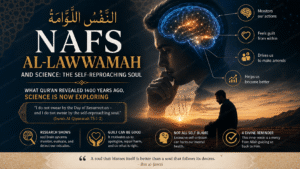
Nafs al-Lawwamah and Science: The Self-Reproaching Soul
What happens inside us when we recognise that we have done something wrong—even when nobody else…
ReadSwipe to see more