
Surah Al-Balad — Learn with Audio & Meaning
Listen, repeat, and understand Surah Al-Balad with word-by-word audio, simple meanings, and a smooth memorization flow designed for clarity.
- Origin: Mecca
- Āyāt: 20
- Theme: The steep path and the people of right and left
Highlights
- 🔉 Word-by-word audio & pronunciation cues
- 🗒️ Gloss of key words and simple tafsīr notes
- 🧭 Clear verse navigation and progress flow
- 👨👩👧👦 Friendly for beginners, kids, and adults
- 🌙 Gentle repetition for long-term retention
FAQ
❓ Do I need to install an app?
✅ No. Everything runs in your web browser.
❓ Can kids learn with this?
✅ Yes. The interface and audio flow are suitable for children.
❓ Does it include tafsīr?
✅ Yes. Short, easy notes are included for understanding.
~ٱلْبَلَد~
Surah Al-Balad (The City)
Reflect on how Allah created man in hardship, showed him the two paths, and described the steep path of faith, charity, and mercy.
🔹Reference🔹
Read the original Arabic Tafsīr al-Saʿdī for this surah
Already familiar with this Surah?
Skip to Quiz
📖 Verse 1
لَا أُقْسِمُ بِهَٰذَا الْبَلَدِ
English Tafsir (Al-Sa‘di):
Allah swears by this secure and honoured city, Makkah, magnifying its status and the blessing of safety and sanctity placed within it.
Allah’s oath by Makkah shows its virtue and the greatness of what follows.
📖 Verse 2
وَأَنتَ حِلٌّ بِهَٰذَا الْبَلَدِ
English Tafsir (Ibn Kathir):
Since Al-Sa‘di has no recorded tafsir for this verse on the official KSU website,
we use here the explanation of Ibn Kathir instead.
He explains that Allah mentions the Prophet ﷺ being made ḥill in this city,
meaning that fighting in Makkah was made permissible for him for a short time
on the day of its conquest, while the city remains a sacred sanctuary before
and after that.
Source: Tafsir Ibn Kathir on KSU (Surah 90, Ayah 2)
Allah granted His Messenger ﷺ a special, temporary permission in this sacred city
that does not apply to others, while its inviolability remains in place.
📖 Verse 3
وَوَالِدٍ وَمَا وَلَدَ
English Tafsir (Al-Sa‘di):
Allah also swears by the begetter and all whom he begot, meaning Adam and his offspring, indicating the honour of the human race.
An oath by mankind’s father and his descendants to stress the coming message.
📖 Verse 4
لَقَدْ خَلَقْنَا الْإِنسَانَ فِي كَبَدٍ
English Tafsir (Al-Sa‘di):
Indeed, Allah created the human being in toil and struggle, facing difficulties in this world and the Hereafter, so he must strive in obedience to find true ease.
Human life is naturally full of effort and hardship.
📖 Verse 5
أَيَحْسَبُ أَن لَّن يَقْدِرَ عَلَيْهِ أَحَدٌ
English Tafsir (Al-Sa‘di):
Does this arrogant person think that no one has power over him, so he feels secure and acts without fear of accountability?
A false assumption that no one can ever overpower or call him to account.
📖 Verse 6
يَقُولُ أَهْلَكْتُ مَالًا لُّبَدًا
English Tafsir (Al-Sa‘di):
He boasts, saying that he has spent vast amounts of wealth, wasting it in desires and showing off, not in obedience to Allah.
Boasting about squandered wealth is a sign of pride and heedlessness.
📖 Verse 7
أَيَحْسَبُ أَنْ لَمْ يَرَهُ أَحَدٌ
English Tafsir (Al-Sa‘di):
Does he imagine that no one sees him, forgetting that Allah watches his spending, his intentions, and all of his actions?
A reminder that Allah’s knowledge and sight encompass everything he does.
📖 Verse 8
أَلَمْ نَجْعَلْ لَهُ عَيْنَيْنِ
English Tafsir (Al-Sa‘di):
Allah reminds him of the gifts He gave: two eyes by which he sees benefits and harms, a clear proof of Allah’s mercy.
Vision itself is a sign and blessing requiring gratitude.
📖 Verse 9
وَلِسَانًا وَشَفَتَيْنِ
English Tafsir (Al-Sa‘di):
He was also given a tongue and two lips, enabling clear speech, remembrance, and communication with people.
These faculties should be used in truth and obedience.
📖 Verse 10
وَهَدَيْنَاهُ النَّجْدَيْنِ
English Tafsir (Al-Sa‘di):
Allah showed him the two clear paths: the way of good and guidance, and the way of evil and misguidance, through revelation and inner awareness.
The human being is not left without direction; both routes are made evident.
📖 Verse 11
فَلَا اقْتَحَمَ الْعَقَبَةَ
English Tafsir (Al-Sa‘di):
Yet he did not strive to climb the steep path: the difficult way of obedience and self-discipline that leads to Allah’s pleasure.
The true challenge is to force the soul through the hard road of righteousness.
📖 Verse 12
وَمَا أَدْرَاكَ مَا الْعَقَبَةُ
English Tafsir (Al-Sa‘di):
Allah magnifies the steep path and draws attention to its greatness by asking what will make you truly know what it is.
A rhetorical question to prepare the heart for its description.
📖 Verse 13
فَكُّ رَقَبَةٍ
English Tafsir (Al-Sa‘di):
The steep path is, first, freeing a slave, rescuing a neck from bondage for the sake of Allah.
Liberating the oppressed is among the highest forms of charity.
📖 Verse 14
أَوْ إِطْعَامٌ فِي يَوْمٍ ذِي مَسْغَبَةٍ
English Tafsir (Al-Sa‘di):
Or feeding people on a day of severe hunger, when food is scarce and people are in great need.
Charity at times of hardship is more perfect and rewarded.
📖 Verse 15
يَتِيمًا ذَا مَقْرَبَةٍ
English Tafsir (Al-Sa‘di):
That feeding is especially virtuous when it is given to an orphan who is near in kin, combining the right of kinship with the right of need.
Supporting a related orphan gathers multiple rewards.
📖 Verse 16
أَوْ مِسْكِينًا ذَا مَتْرَبَةٍ
English Tafsir (Al-Sa‘di):
Or a destitute poor person clinging to the dust, who owns nothing and lives in extreme need.
Helping the most deprived and humiliated is part of this steep path.
📖 Verse 17
ثُمَّ كَانَ مِنَ الَّذِينَ آمَنُوا وَتَوَاصَوْا بِالصَّبْرِ وَتَوَاصَوْا بِالْمَرْحَمَةِ
English Tafsir (Al-Sa‘di):
Then, along with these deeds, he is one of those who believe, and who encourage one another to be patient and to show mercy.
Faith, patience, and compassion together complete the steep path.
📖 Verse 18
أُولَٰئِكَ أَصْحَابُ الْمَيْمَنَةِ
English Tafsir (Al-Sa‘di):
Those people are the companions of the right, the people of success and happiness with Allah.
Their record and place are on the side of honour and blessing.
📖 Verse 19
وَالَّذِينَ كَفَرُوا بِآيَاتِنَا هُمْ أَصْحَابُ الْمَشْأَمَةِ
English Tafsir (Al-Sa‘di):
As for those who disbelieve in Our signs, reject faith, and turn away from these qualities, they are the companions of the left.
Their end is misfortune and loss.
📖 Verse 20
عَلَيْهِمْ نَارٌ مُّؤْصَدَةٌ
English Tafsir (Al-Sa‘di):
Upon them is a Fire closed in on every side, whose doors are shut so that they cannot escape its punishment.
A sealed, inescapable blaze for the people of the left.
📚 Recap: Surah Al-Balad
Summary of the Meanings:
Allah swears by Makkah and by Adam and his offspring, then reminds man that he was created in hardship and is always under Allah’s power and sight.
Eyes, tongue, lips and guidance to the two ways are great favours, yet many people refuse to climb the steep path of freeing slaves and feeding the needy.
The people of the right combine faith, patience, and mercy; the people of the left disbelieve and neglect these qualities, so a sealed Fire awaits them.
📝 Al-Balad Quiz – Based on Tafsir Al-Sa‘di
Related Articles
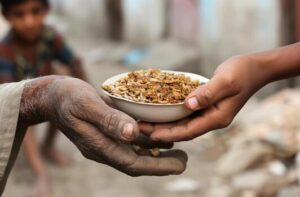
Degrees of Hunger in the Qur’an: Linguistic Precision and Meaning
Degrees of Hunger in the Qur’an: Linguistic Precision and Meaning The Qur’an does not use words…
ReadSwipe to see more